
Why I Collect Trash
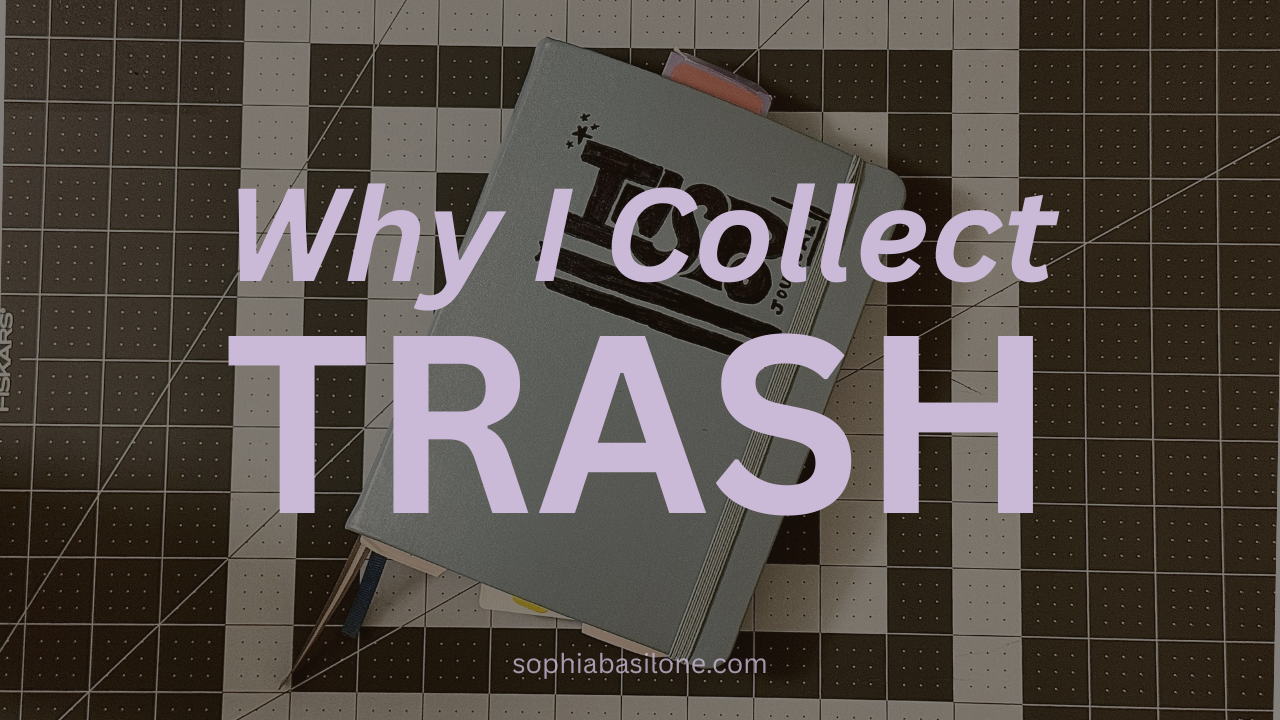
I collect trash. Well, not trash trash, don’t worry, this isn’t an episode of Hoarders or My Strange Addiction. I collect little pieces of packaging with beautiful or interesting designs… for research purposes (I promise).
As a graphic designer, I primarily save these little pieces of garbage for inspiration during a future project. I may see a drop tag that’s subtly embossed or a card with spot gloss. I’ll see skincare packaging design with an interesting way of laying out directions or have a unique approach to displaying information.
Taking a photo may not do all the textures justice, nor does it allow me to get up close and personal to see the little details. Plus, it’s an added bonus to have a part of my process analog when so much of it is digital.
I’ll take the piece of trash for myself, and instead of leaving it to end up in a landfill, I add it to my “Inspiration Journal” to reference later. This way, it gets to live on with a new purpose.
If one man’s trash is another man’s treasure, then one man’s trashed tag is my next piece of inspiration.
Junk Journaling
You may have heard of junk journaling before. What I am doing with my inspiration journal is very similar, just less aesthetic and curated.
Junk journaling is “a style of art journaling where you use materials that are destined for the trash,” says Lori Greenberg, “like old papers, ticket stubs, magazine clippings, and even candy wrappers.” It’s like collaging with only what you find around.
Through this process, you look past the surface level of an item, and instead of viewing it as something to be discarded, you see it as more. You’re repurposing trash and giving it a new purpose.
Why Having Physical Designs is Important
Seeing real sizes
It’s a common mistake to use text sizes too large for printed materials. While you may be used to 12-point font from essays, 8 to 10-point type works much better on printed materials.
A pro of keeping packaging and other printed materials is that you get to reference their type.
Referencing the Things That are Often Overlooked
When seeing something like packaging in person, you’ll often remember the front of the box or label. The information-dense back, however, is a lot less likely to stick.
Saving boxes and labels allows you to pick up your journal and reference details whenever you need them. You can see how information is worded and laid out. You can look at the shape of a box to see how it fits together, using it as a guide for a dieline.
There’s no pressure to remember small details, and you can inspect the finer details on your own time and at your own pace.
Memories
Apart from all the ideas, one of the best parts of going through my inspiration journal is reliving the memories. The trash often comes from moments with friends or family. Looking at the logo on a bag or drop tag from a store I went to serves as a lovely stroll down memory lane.
What's in My Journal
In my journal, you’ll find everything from logo to packaging design inspiration. I have drop tags, boxes, cut-outs of paper bags, wrappers, labels, and promotional inserts. I’m always on the lookout for the next addition.
As long as it can fit and your journal can close, it can make the cut. There’s no restriction on what can find its home in your journal.

Hi, I’m Sophia. I’m a graphic designer who’s passionate about creating intentional, strategic, and eye-catching designs. From brand identities to motion graphics and from stationary to large displays, I’m here to help translate your what’s in your mind to an effective and eye-catching final product.
Let’s make something great!
